
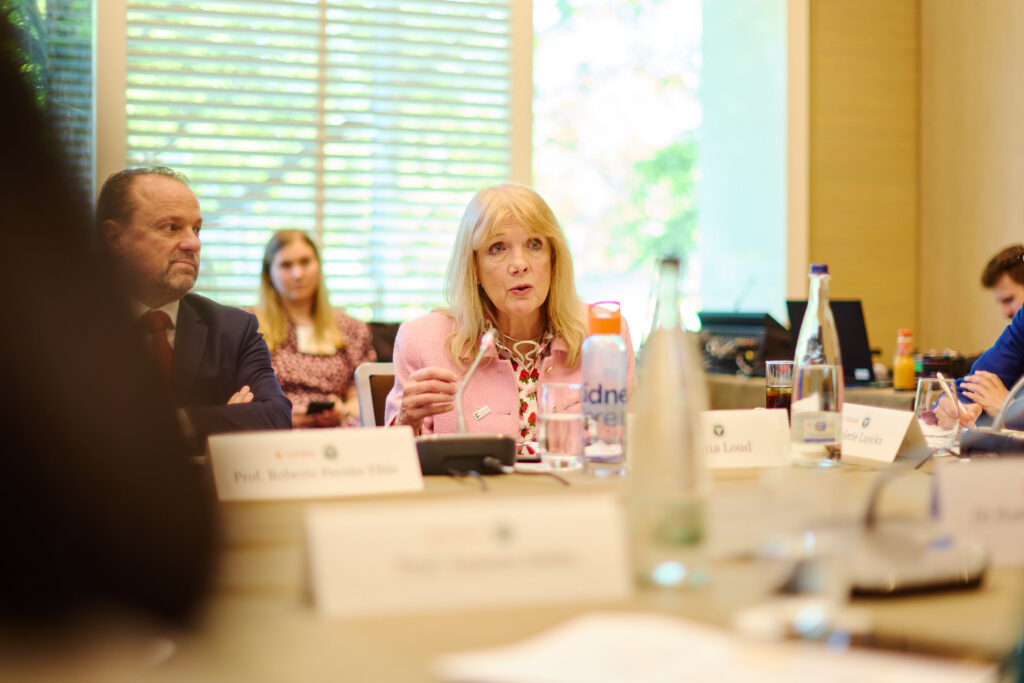
A year after the World Health Organization agreed to prioritize kidney disease the atmosphere in Geneva was positive – the world could be seen to have worked together for kidney health. I was pleased to attend a meeting organized by the Global Patient Alliance for Kidney Health – of which Kidney Care UK is a member – focused on the cardio-kidney-metabolic impact on individuals as an indicators of where health policy needs to go next.
The session looked at the disproportionate impact of CKM conditions on women’s wellness through the eyes of women who have been affected. We heard that each of those women had not been recognized soon enough and have not been treated soon enough. Their whole lives are now affected by the consequences, which could have turned out differently if someone had listened properly to what they were saying about their heart and kidney problems.
In the U.K., the Westminster Government has recently announced a renewed Women’s health strategy; it says that “gaping health inequalities exist, not only between men and women – women spend more years in ill health than men, despite living longer – but also among women. There are also ethnic differences in outcomes and risk factors.” This strategy has been renewed to produce a more meaningful impact and fundamental reform, rather than making small changes to existing systems. It talks about maternal health, inequalities, cancer care and cardiovascular care and makes many commitments for the future.
Among other things they say that they want to tackle the biggest causes of death and poor health in women by improving their focus on cardiovascular disease risk management and care; we are waiting for the publication of a new cardiovascular modern service framework this year which may help.
What we heard in Geneva highlighted the strong need for women’s wellness to receive attention and indeed the intersection with cardiovascular health will be vital for kidney disease itself to achieve the prioritisation the world believes it deserves. The lack of recognition of symptoms, the fact that stroke, heart attacks or hypertension in younger women don’t systematically get the follow ups they need speak to the fragmentation of our health care systems. From my own perspective as a woman with kidney failure who has previously been seen as a person with various healthcare symptoms such as anemia, hypertension and endocrine problems but no curiosity about the underlying cause it really is past time to wake up to the disproportionate gap in our healthcare systems and to call attention to cardio-kidney-metabolic conditions and women’s health which with early intervention and accessible community care can change our whole lives.
Fiona Loud is the policy director at Kidney Care UK.