
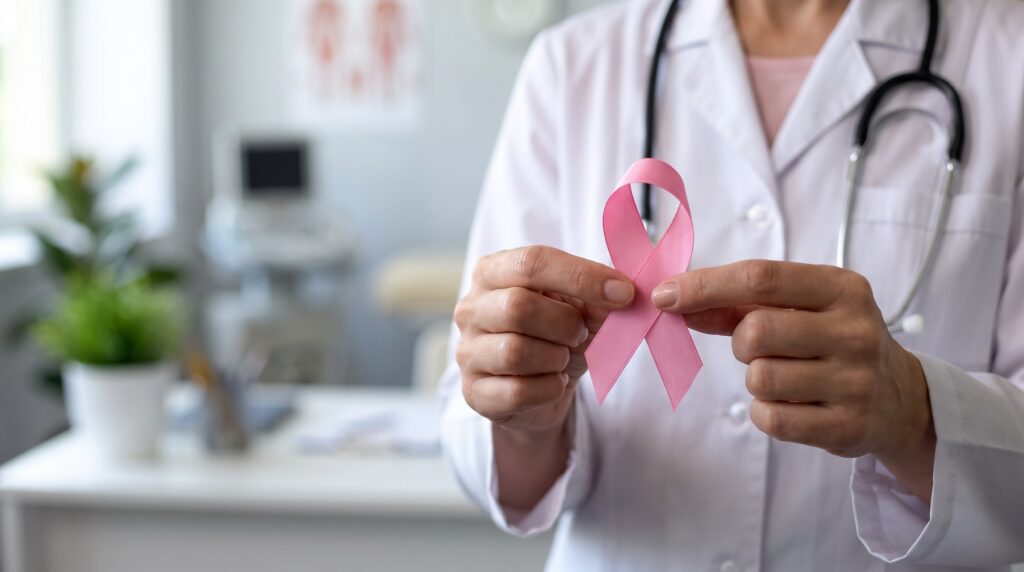
Breast cancer is the most common cancer among women worldwide. This Breast Cancer Awareness Month, the Partnership for Women’s Wellness is shining a light on the growing global burden of breast cancer and how prevention, screening and early-stage treatment can change outcomes for women everywhere.
A Growing Global Burden
In 2024, an estimated 2.4 million women worldwide were diagnosed with breast cancer and 694,000 died from the disease. For many women, a diagnosis marks the start of a long physical and emotional journey.
The physical toll of treatment is significant. Surgery, chemotherapy and radiation can bring scarring, chronic pain and fatigue, with some treatments triggering early menopause and affecting fertility. The mental toll can be just as taxing. Anxiety, depression and changes to the body can affect self-image and relationships. Because women are so often at the center of their households, that strain reaches families and communities too.
Where a woman lives can impact the quality of care she receives, too. Women in Western Africa, for example, are twice as likely to die from breast cancer as women in Australia and New Zealand, despite having half the incidence rate.
Early Detection Transforms Outcomes
When breast cancer is found early, women have more treatment options and a far better chance of recovery. Awareness and regular screening are essential for all women, especially since roughly half of all breast cancers occur in women with no specific risk factors beyond sex and age.
The World Health Organization’s Global Breast Cancer Initiative aims to reduce breast cancer deaths by 2.5% each year, which would avert 2.5 million deaths between 2020 and 2040. A central benchmark of this initiative is diagnosing more than 60% of invasive cancers at stage I or II. Reaching that goal requires health systems that treat screening as routine care.
Closing the Gaps in Care
Awareness is the first step, but women also need systems that make screening and treatment accessible. Tisha Boatman, executive vice president of global external affairs and healthcare access at Siemens Healthineers, has seen this firsthand. As Tisha recently shared at a policy roundtable Siemans and the Partnership for Women’s Wellness convened alongside the United Nations General Assembly, as a breast cancer survivor, she knew enough to do self-checks and advocate for herself, and she had access to diagnostics that many women don’t. Providers should be educated on the risks and symptoms. Women must be empowered to know the early signs. And screening programs must reach rural and underserved communities to fill gaps in care.
With a timely diagnosis must come quick follow-up and early-stage treatment. This requires simple and responsive referral pathways, so that a woman who notices a symptom or receives an abnormal screening result is not left waiting for answers.
Part of a Larger Picture
Breast cancer is a major marker of the burden of noncommunicable diseases, or NCDs, the leading cause of death among women worldwide. Investments that strengthen breast cancer care, from trained providers to routine screening and coordinated follow-up, can also lay the groundwork for catching cardiovascular disease, diabetes and other chronic conditions earlier. Many of these conditions also share risk factors with breast cancer, including obesity, physical inactivity and alcohol use, so prevention efforts that address one can lower the risk of several. Women’s health is best served when it is treated as a whole, not as a series of separate diagnoses.
This Breast Cancer Awareness Month, the Partnership for Women’s Wellness urges policymakers, providers and health system leaders to invest in prevention, accessible screening and early-stage treatment so that every woman, wherever she lives, has the chance to be diagnosed early and recover fully. When women’s wellness is treated as a priority rather than an afterthought, families, communities and societies grow stronger.