
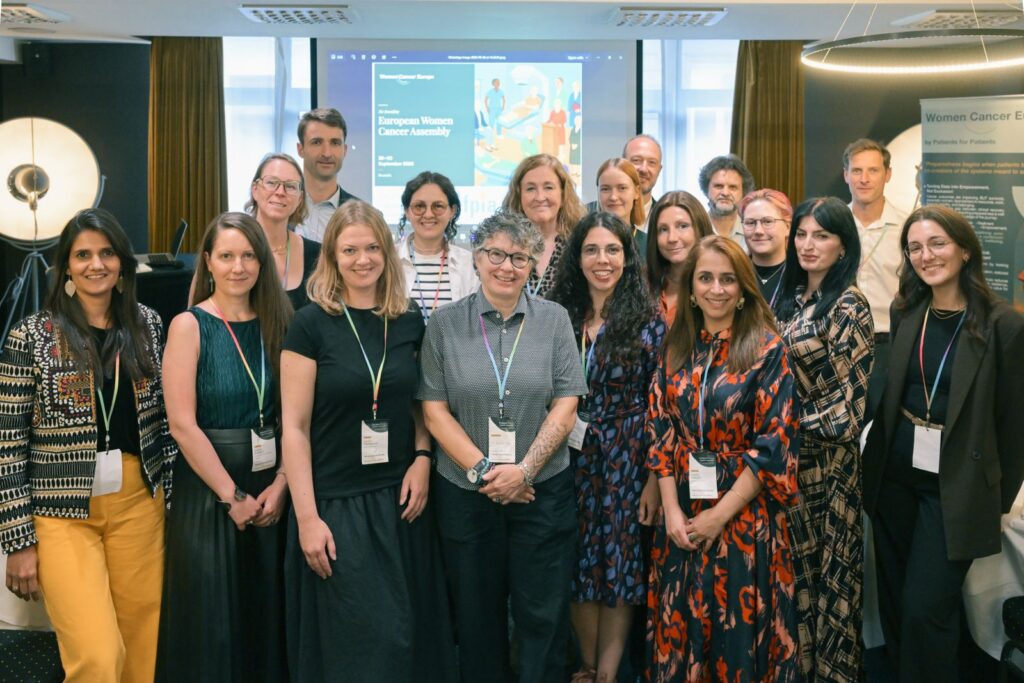
Last month, the Partnership for Women’s Wellness, or PWW, joined the first European Women Cancer Assembly in Brussels, Belgium, hosted by Women Cancer Europe. With new statistics reporting that one in 13 women will die from cancer across the world, PWW participated in a discussion titled “Sex and Gender Blind Spot in Cancer Care and Research,” which underlined the need for health care systems to prioritize shortening and personalizing women’s journey from first symptom to receiving the care they need.
This session brought together cancer survivors and advocates to discuss the effects of care gaps in cancer care and how they impact women’s wellness across their lifespan. Assembly attendees also developed policy recommendations and advocacy priorities to strengthen support from diagnosis through survivorship and reintegration in the social and economic ecosystems.
Recognizing Early Signs and Symptoms
Educating women to recognize the early signs and symptoms of cancer has been a priority in women’s health. However, the responsibility should not fall solely on patients’ awareness, while systems often overlook women’s cancer symptoms.
As research grows and breakthrough therapies develop, clinicians must stay informed about advances in timely, accurate diagnostic methods. This includes understanding how cancer can manifest differently among women, such as patterns of symptom onset, symptom types and responses to treatment.
Health care systems need to recognize women as whole individuals, not simply through the lens of their disease. Systems need to consider biological differences and symptom variations, while acknowledging real-world constraints women face during cancer diagnosis and treatment, like costs, distance and caregiving responsibilities.
Redefining Precision Care
Precision medicine has helped provide targeted clinical responses to slow disease progression. However, participants shared experiences that often treatment planning seemed focused solely on targeting the tumor while not accounting for its consequences on women’s lives and families.
Cancer is a life-altering disease that can affect areas of a woman’s life beyond the tumor itself. It can also affect fertility planning and long-term ovarian function, ultimately impacting a woman’s quality of life. Redefining precision care broadens the conversation to include patients’ values and quality-of-life considerations alongside treatment goals, as well as access to adequate support early enough to matter for their informed decisions.
Elevating the Lived Experience
A key takeaway from the discussion was that data can help identify where delays in diagnosis occur, but women can tell why. Health care systems need to strengthen cancer prevalence data reporting among women in underserved populations, along with their experiences related to barriers such as scheduling follow-ups and covering out-of-pocket expenses.
More comprehensive patient-experience data can help improve care by identifying how effectively health care systems support women throughout their cancer journey.
Supporting Women Throughout the Cancer Journey
The Partnership for Women’s Wellness supports policies that promote early treatment and comprehensive care for women. In the spirit of the WCE assembly, PWW calls for:
- Advancing patient-centered care so treatment decisions reflect each women’s unique circumstances and needs, and the relevant health services can reach them at a point when they can still make a difference.
- Redesigning systems to improve care coordination and treatment outcomes for women with cancer, based both on data and lived experiences.
- Improving clinical awareness and education to help care teams provide timely access to advanced care, reflecting relevant biological differences.
- Supporting policies that advance inclusive cancer research and treatment.